General Details
Dakota Name:
Ćaƞdi
Scientific Name:
Nicotiana rustica
Alternate Names:
Wild tobacco, Native tobacco, Zuni tobacco, Mapacho
Height:
Up to 5 feet
Flowers:
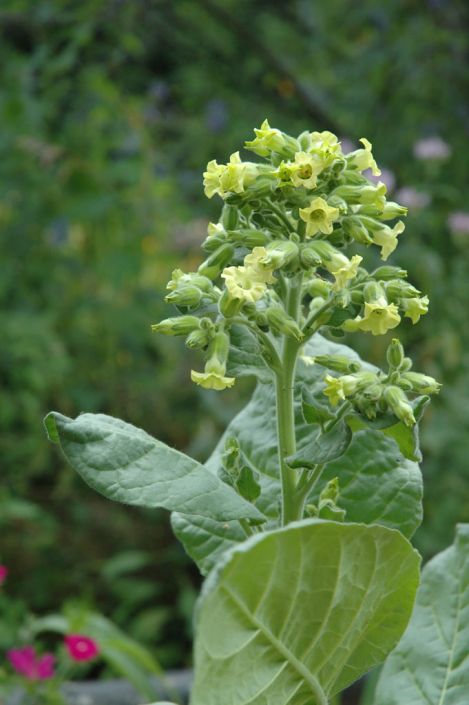
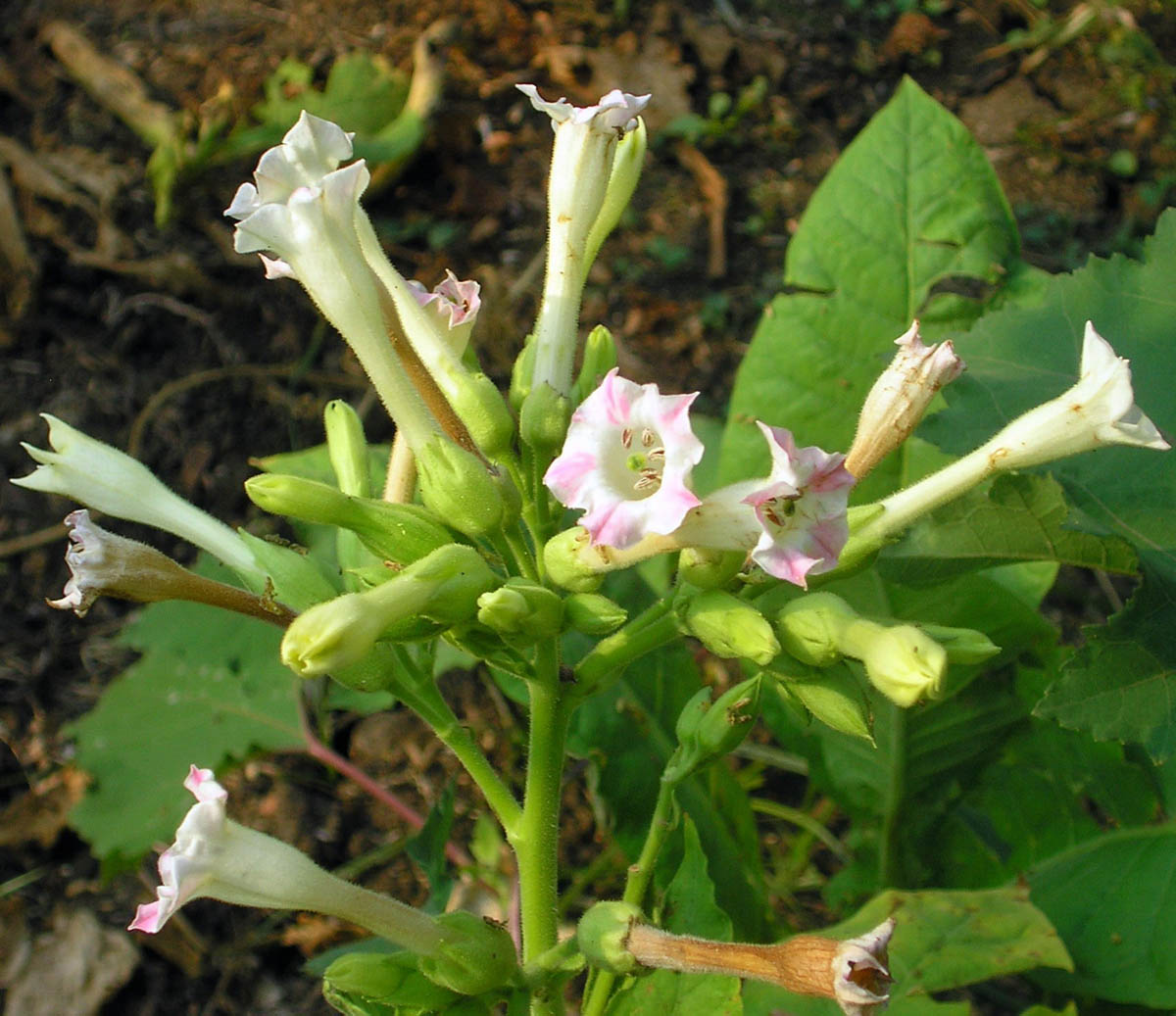
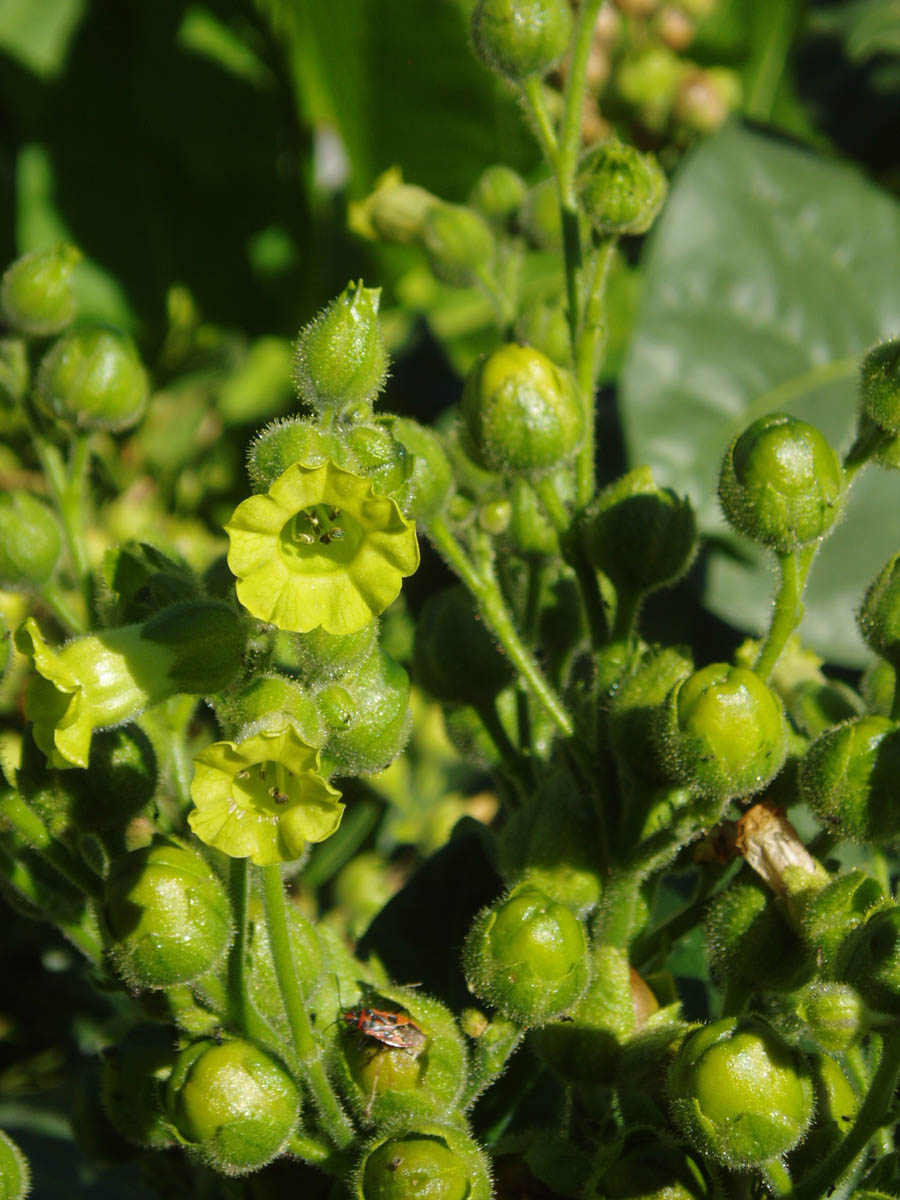
Pale yellow, trumpet-shaped flowers are approximately 1 inch long, exuding a rather unpleasant odor. Blooms July to September.
Fruit:
The numerous, tiny, scarcely flattened, dark seeds form in capsules.
Habitat:
Prefers well-drained soils, from sandy to clay, and full sun.
Plant Characteristics
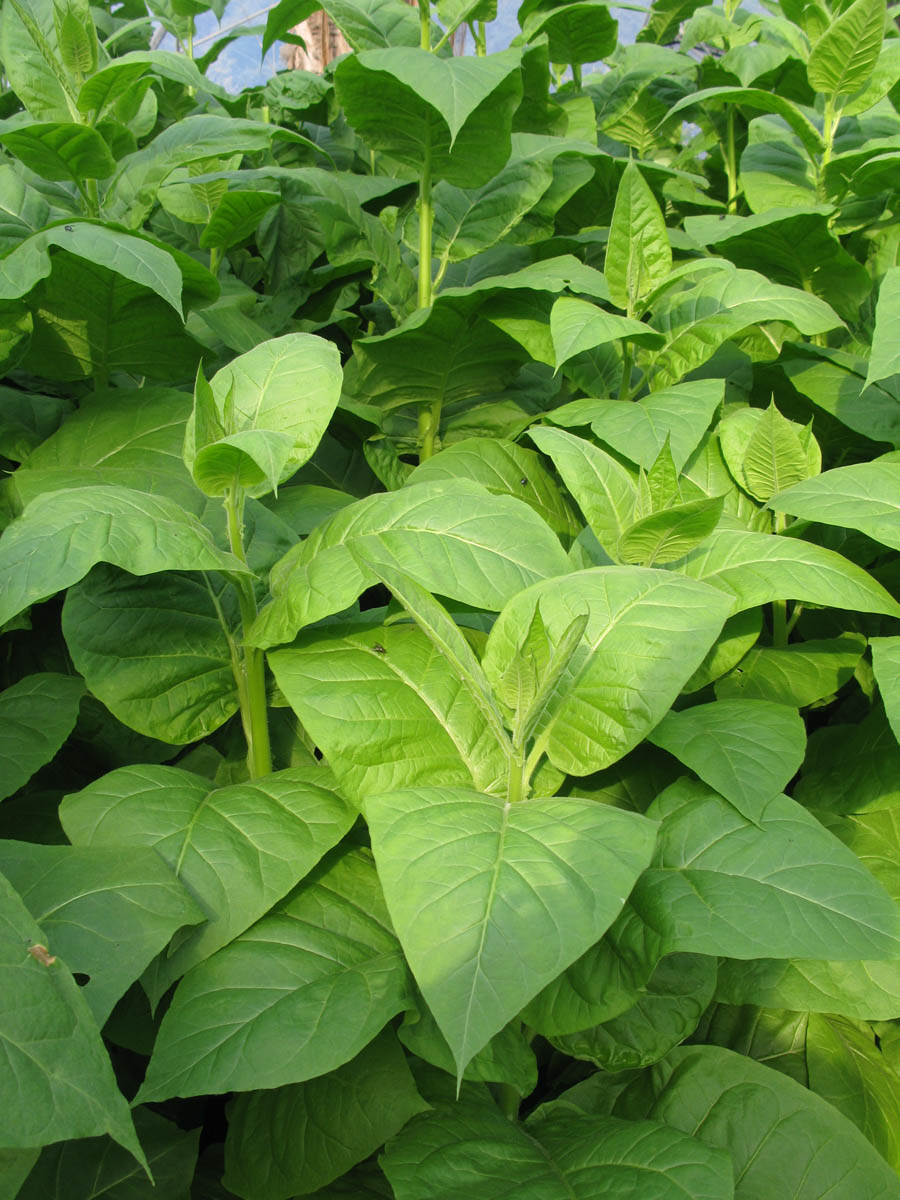
An annual plant can commonly grow shorter in areas north of its natural range and is frost tender. Leaves are alternate, oval to lance-shaped, and up to 12 inches near the base but reduced gradually toward the top.
Dakota Cultural Use
Tobacco was traditionally used as a medicinal herb as an emetic (causing vomiting) and poultice (mass of material applied to body to relieve soreness). It was generally regarded as a sacred
herb and was included among their most valued possessions. It was commonly mixed with other substances such as dried willow bark, inner bark of dogwood, sumac leaves, pungent herbs, and oil.