General Details
Plant Characteristics
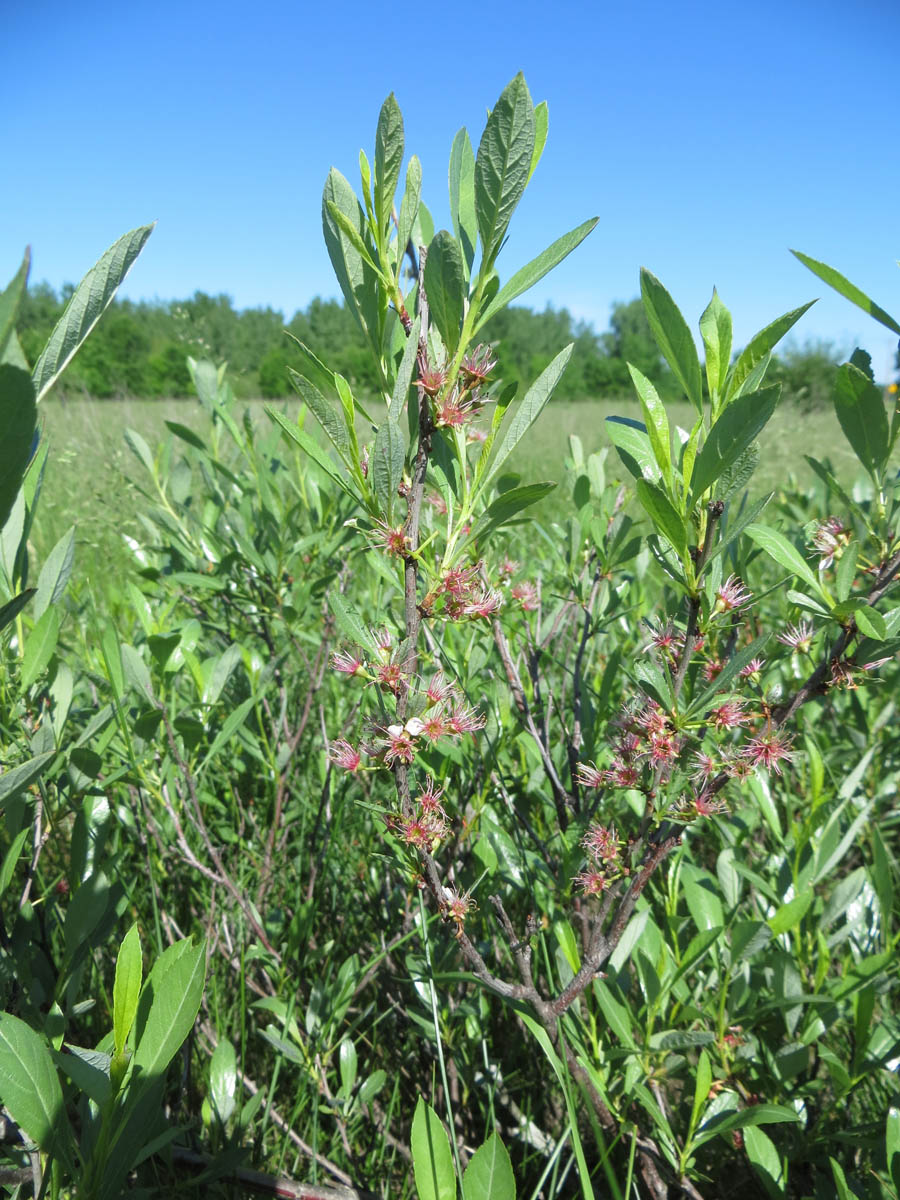
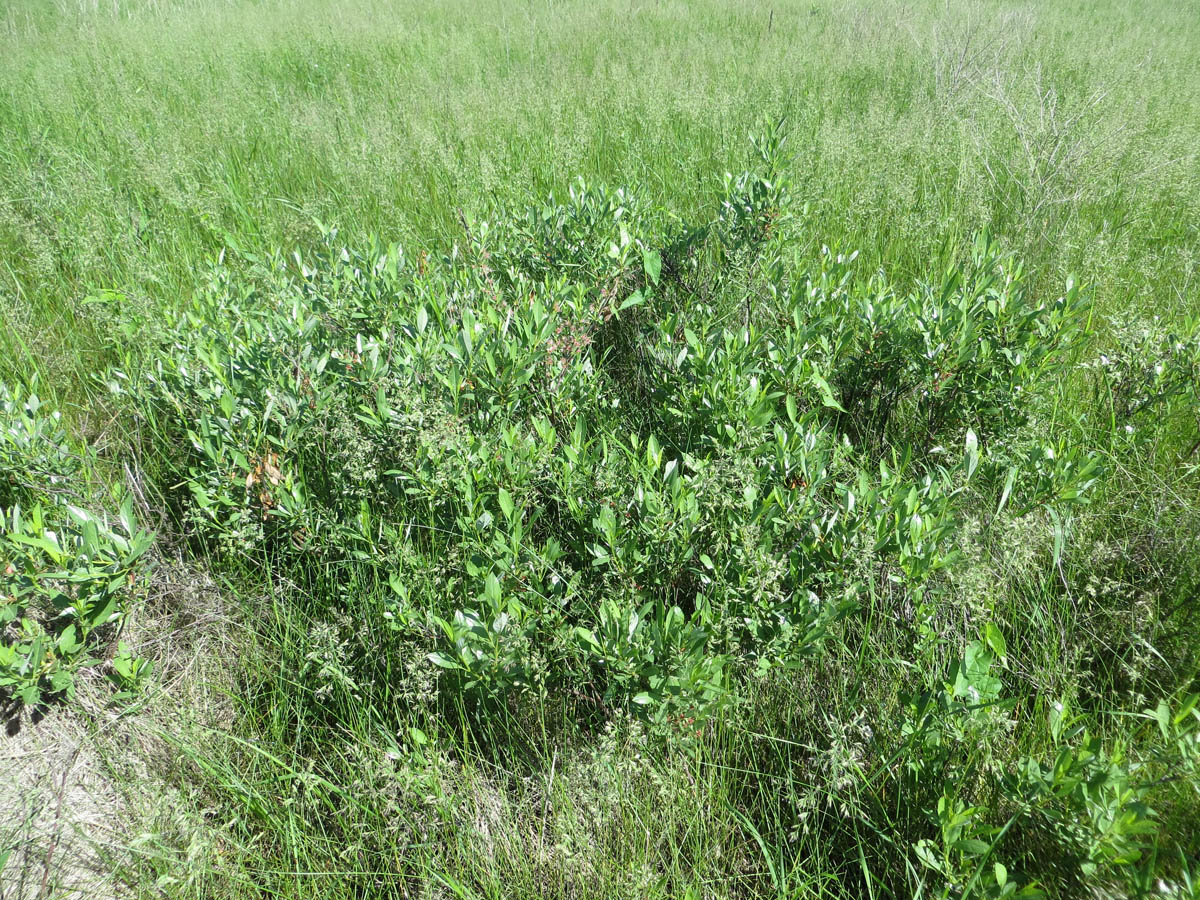
A perennial shrub with low, diffused branches. Leaves simple and wider at tip, with consistent taper towards stalk. Red to brown, shiny, smooth twigs.
Dakota Cultural Use
Used for food in fresh state or dried for winter, first being pitted as are the plums. The Dakota have a saying that if a person gathering cherries moves in the direction contrary to the wind the cherries will be good and sweet, but on the other hand if he moves with the wind the cherries will be bitter and astringent. The name Auŋyeyapi expresses this idea. All the tribes to whom the sand cherries were accessible made full use of them for food as a sauce during their fruiting season and laid up stores of them for winter by drying as they did the plums. The fruit was mashed into paste and formed into a patty which was dried in the sun. The fruit was also made into jelly, jam, pie, or syrup. The fruit was also dried and mixed with meat and fat to create pemmican (a survival/superfood).