General Details
Plant Characteristics
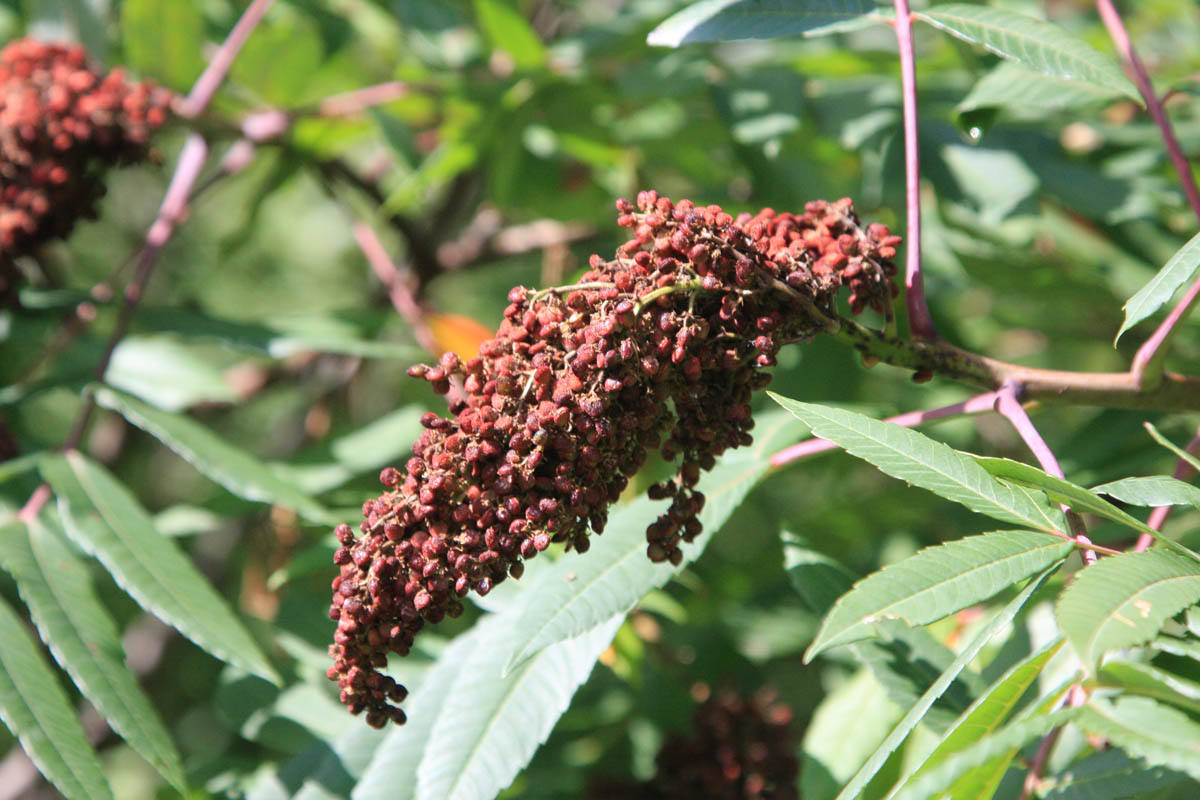
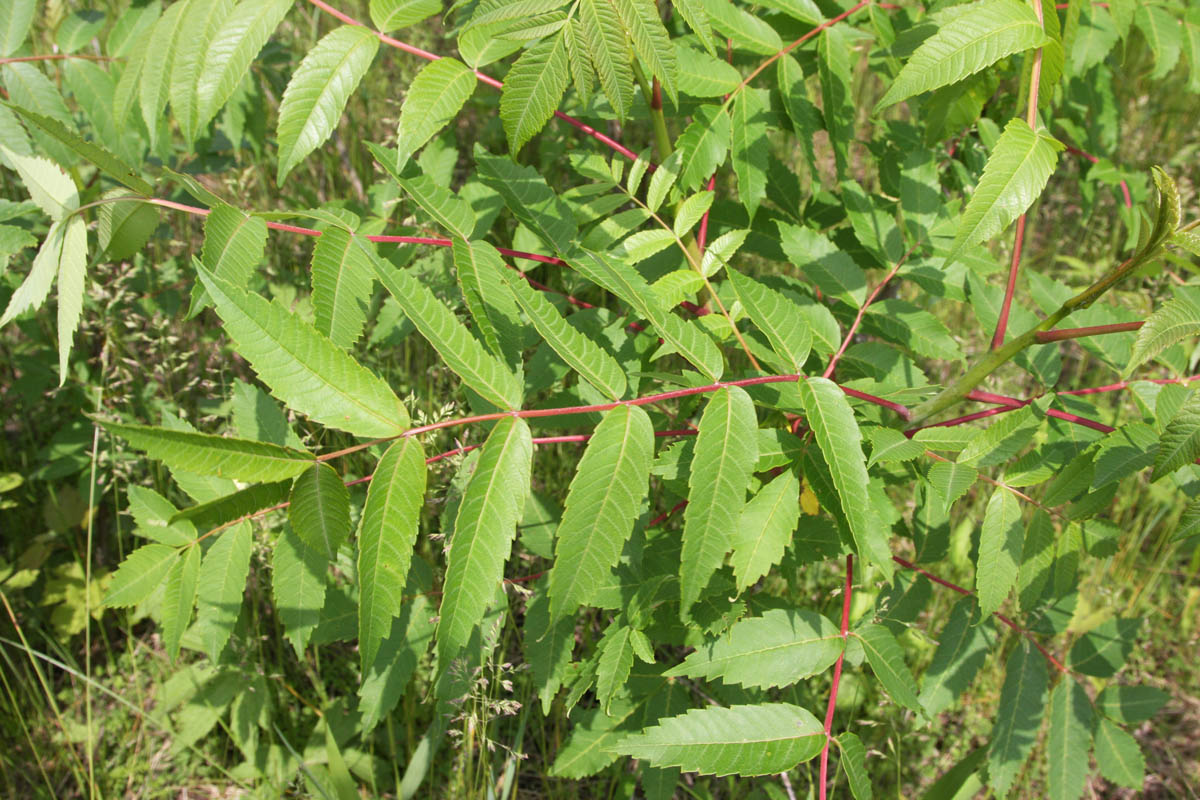
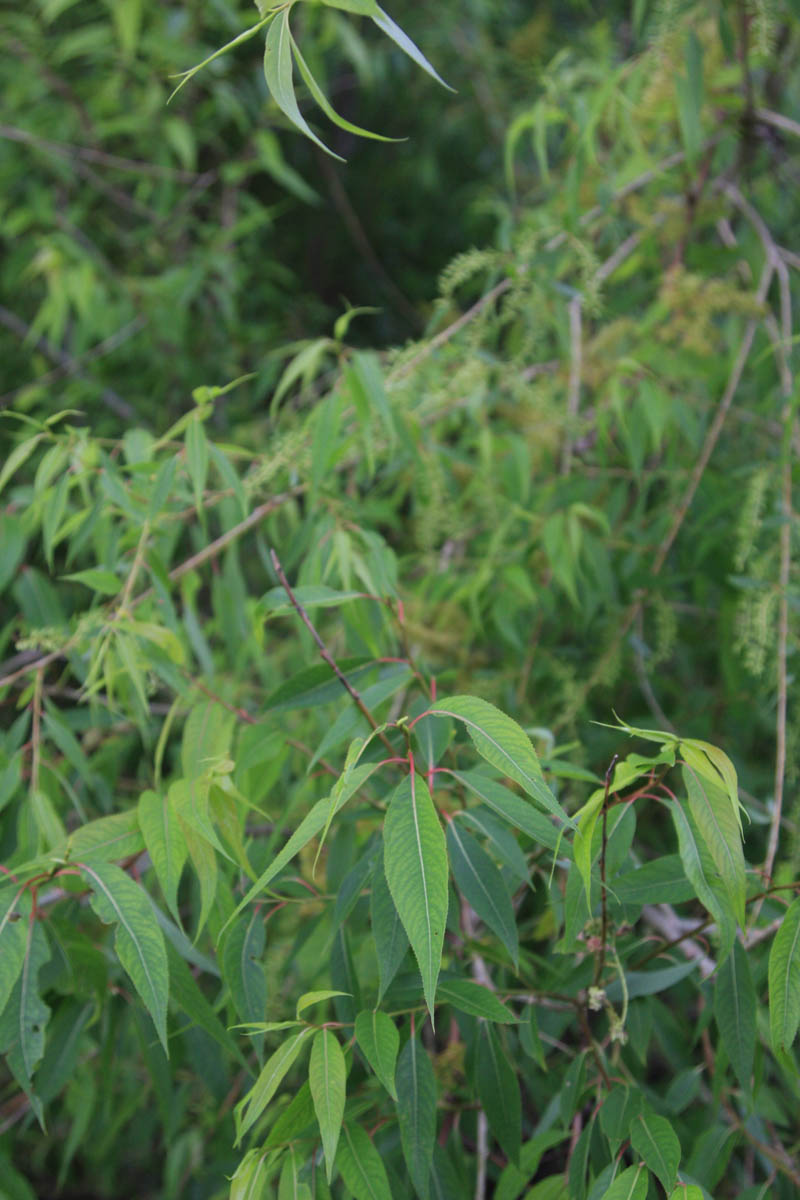
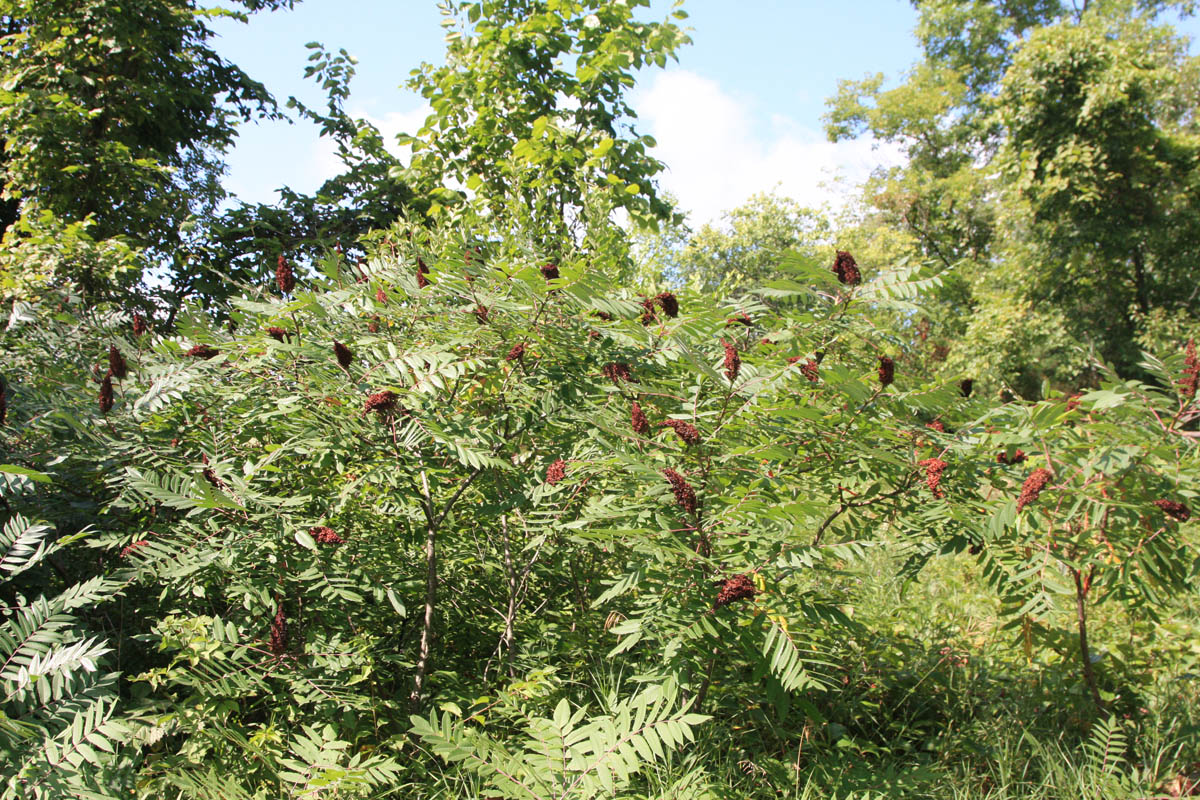
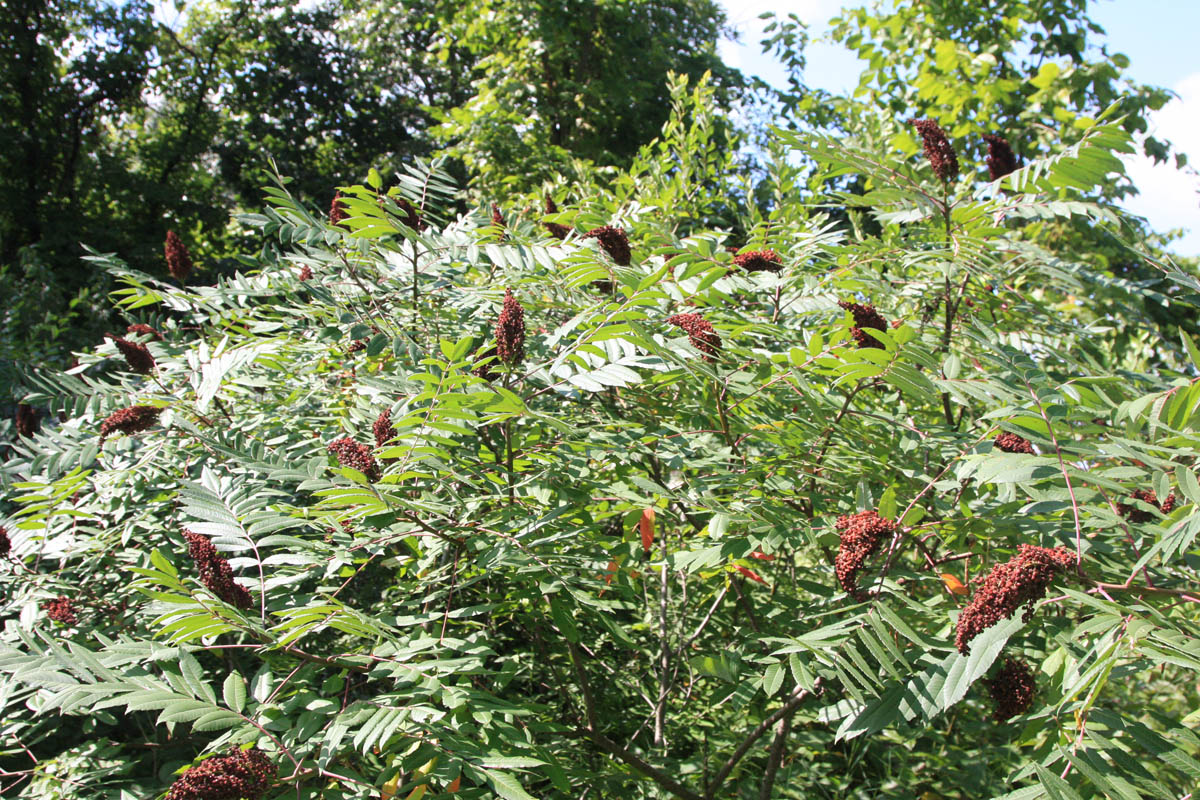
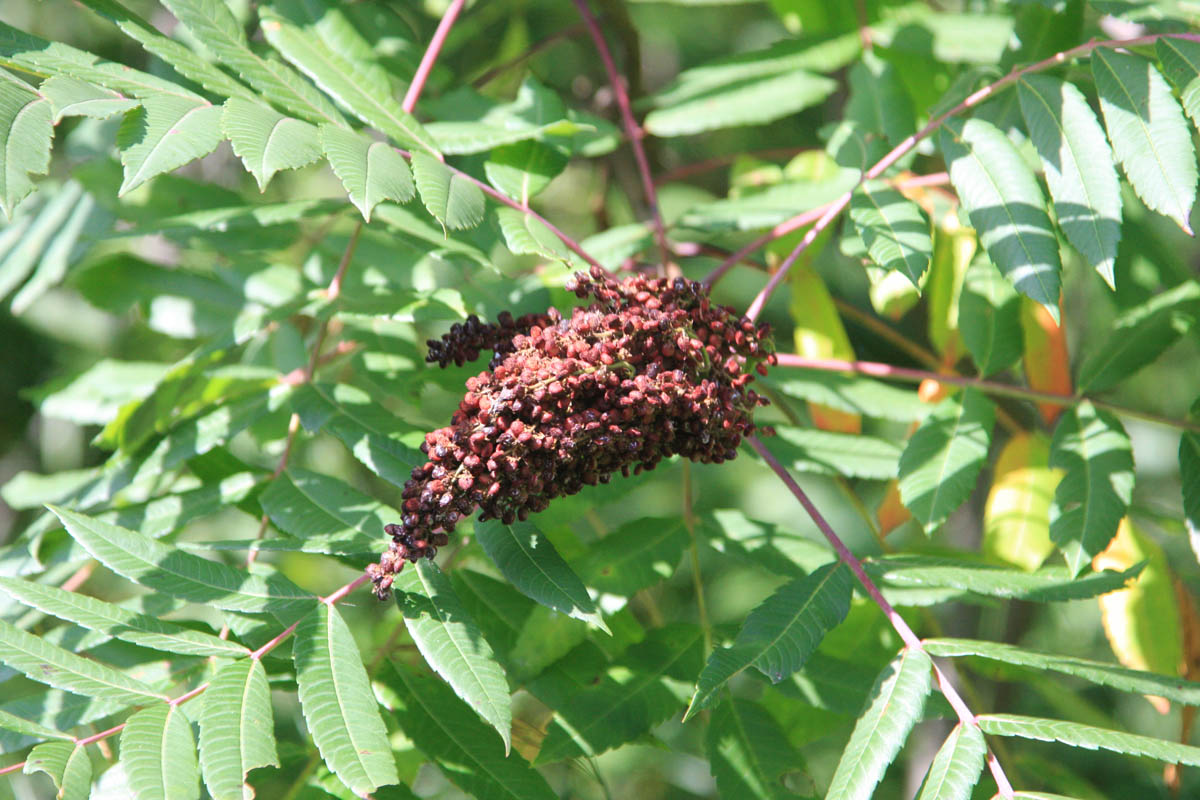
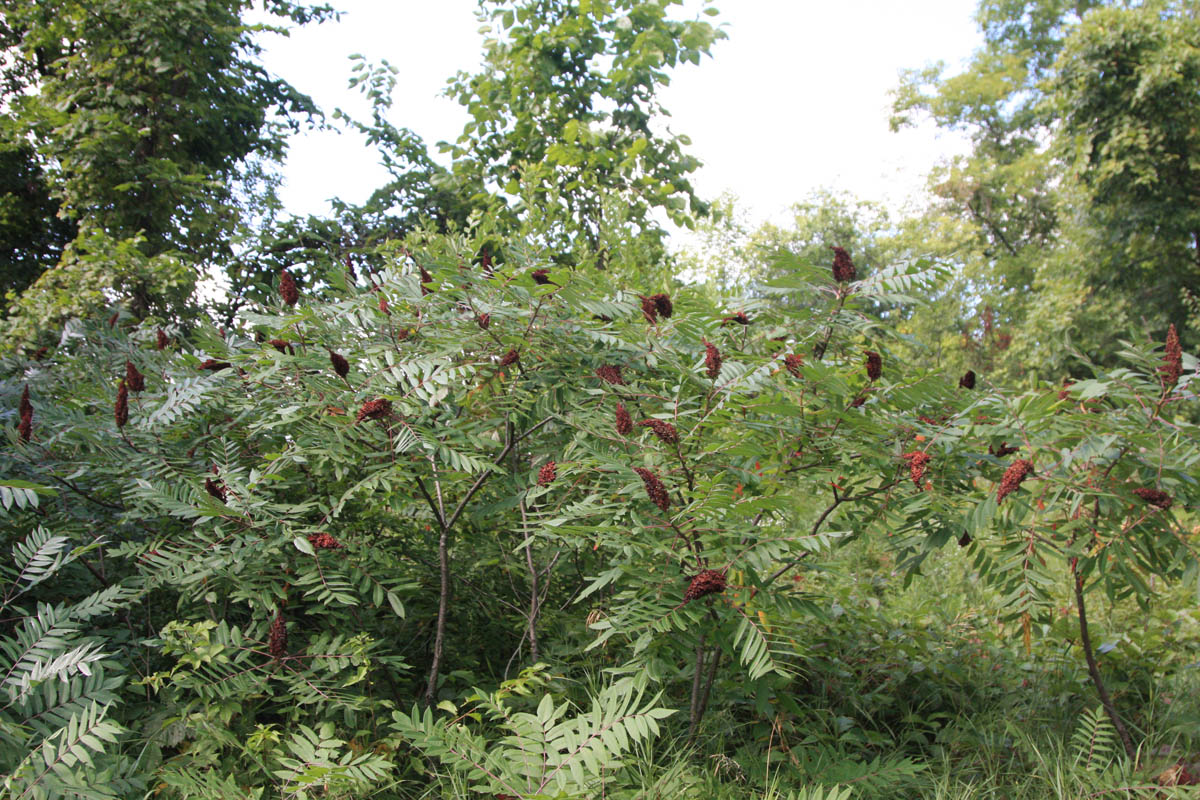
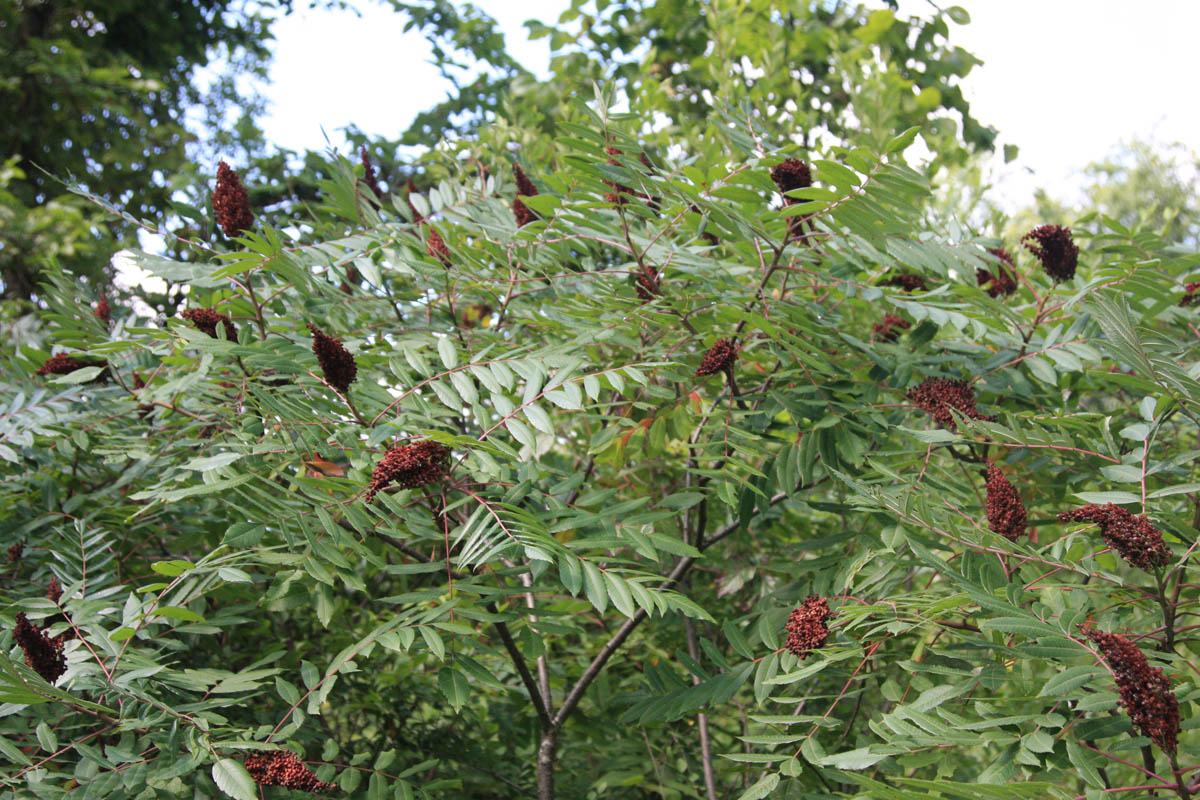
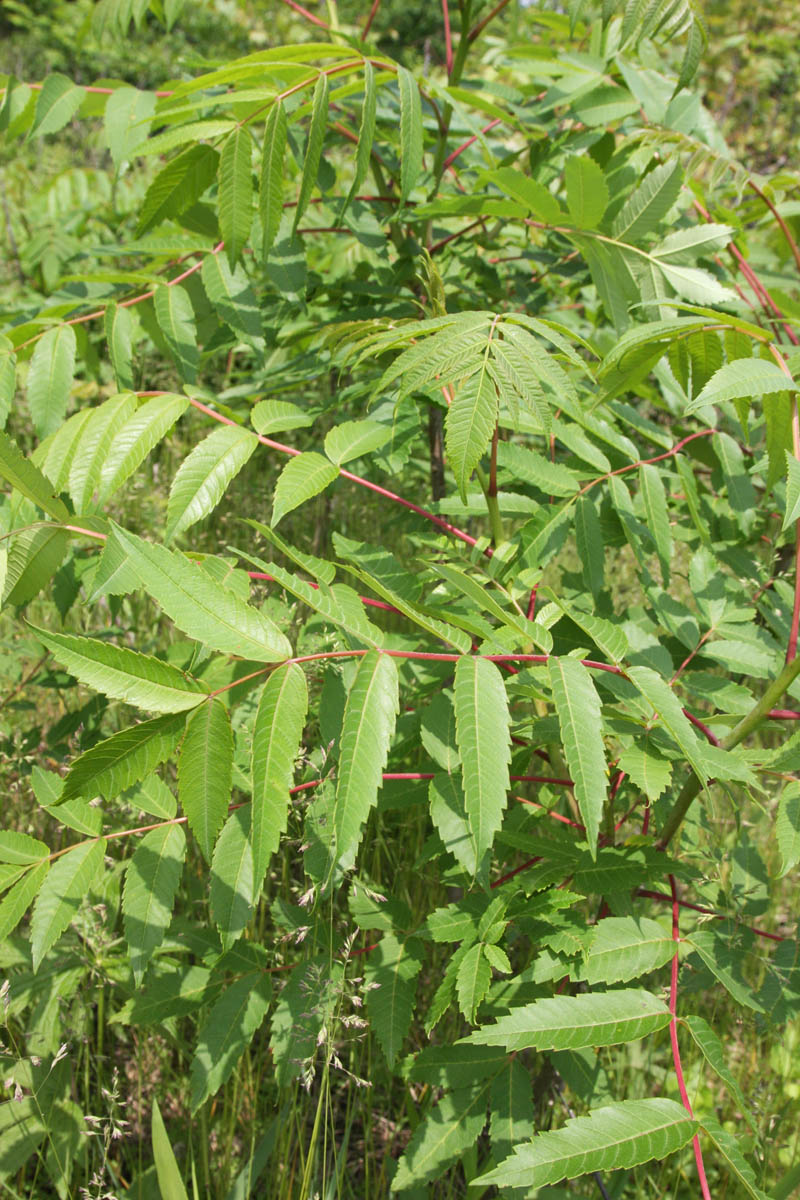
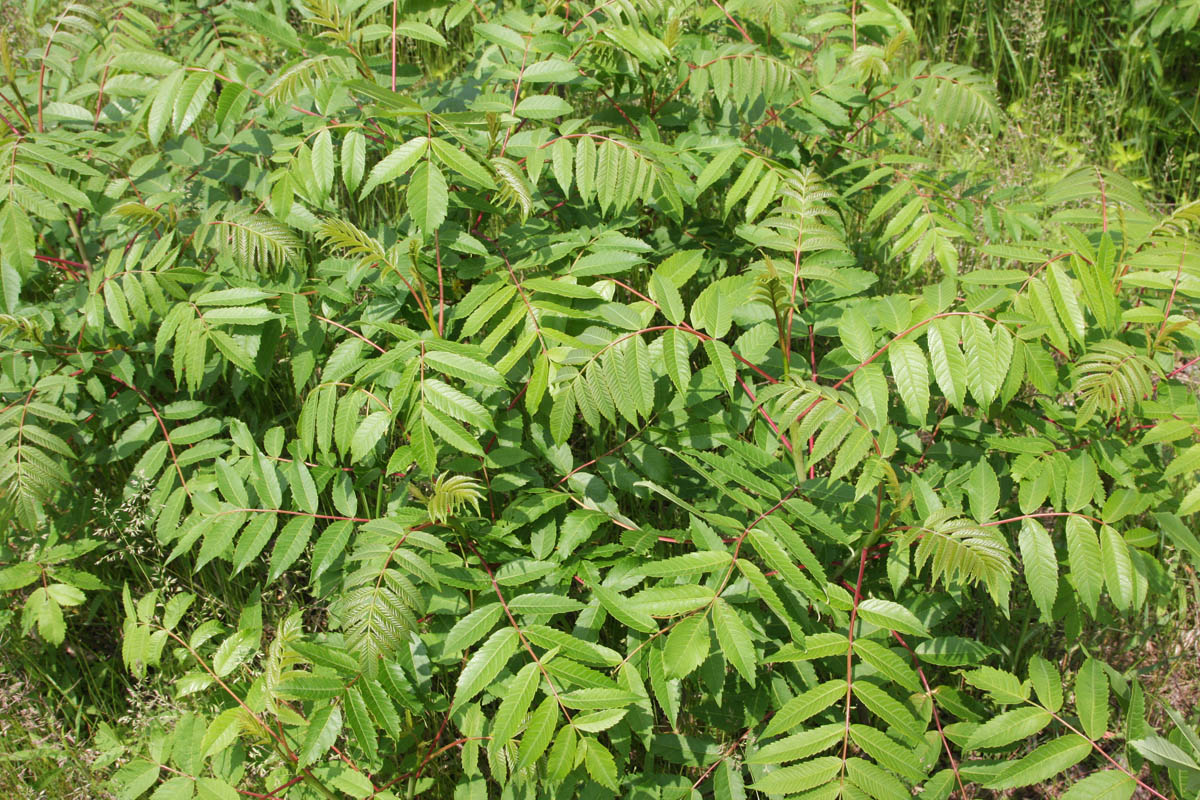
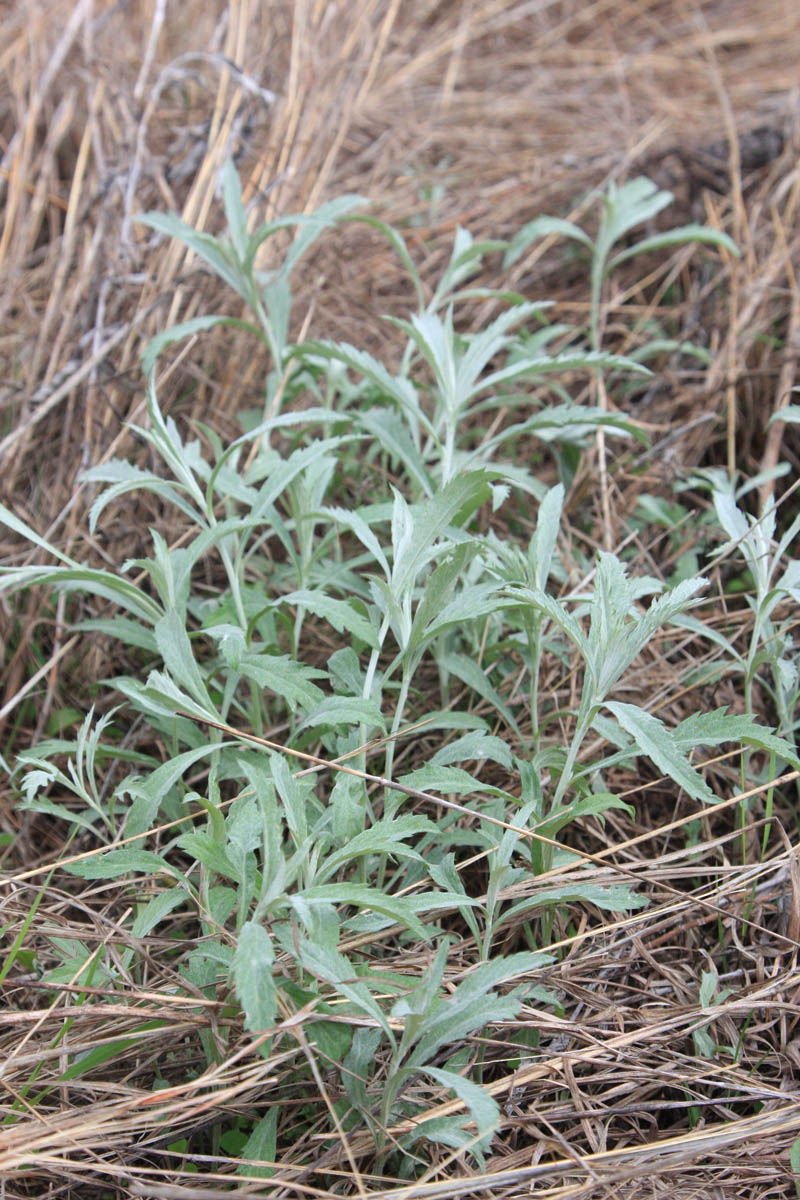
A deciduous shrub or small tree with variable growth form, it can develop into thickets, mats or clumps. The underground portions include a massive root crown, horizontal and vertical rhizomes and an extensive root system. It has alternate, serrated, long leaves. Staghorn sumac stems are densely covered in rust-colored hairs, with the velvety texture of the branches leading to its common name. The fruit is one of the most identifiable characteristics, forming dense, small red clusters at the end of the branches. The leaves turn shades of red, orange, and yellow in the fall. The bark of smooth sumac is thin, light brown and tinged with red and is smooth or shallowly fissured.
Dakota Cultural Use
The berries of the staghorn sumac were used for both warm and cool beverages. The berries are also edible but were typically used in jam or other dishes; rarely eaten raw due to their bitter taste. The leaves of the smooth sumac were gathered and dried for smoking once they began to turn scarlet in the fall. This was also called “yellow-wood” since the roots were used to make a yellow dye. The fruits were boiled to make a remedy for painful menstruation and also for bloody flux, as well as a styptic wash to stop hemorrhage in women childbirth. A decoction of the root was used to drink in case of retention of urine and when urination was painful. The leaves were steeped to make a tea to treat diarrhea. A poultice made by bruising the leaves was applied wet in case of poisoning of the skin, as by some irritant vegetal oil. In case the leaves could not be had the fruits were soaked and bruised, the application being kept moist with the water in which the fruits had been soaked.