General Details
Dakota Name:
C̣aƞwiyape
Scientific Name:
Vitisriparia
Alternate Names:
Frost grape, river bank grape
Height:
Up to 50 feet
Flowers:
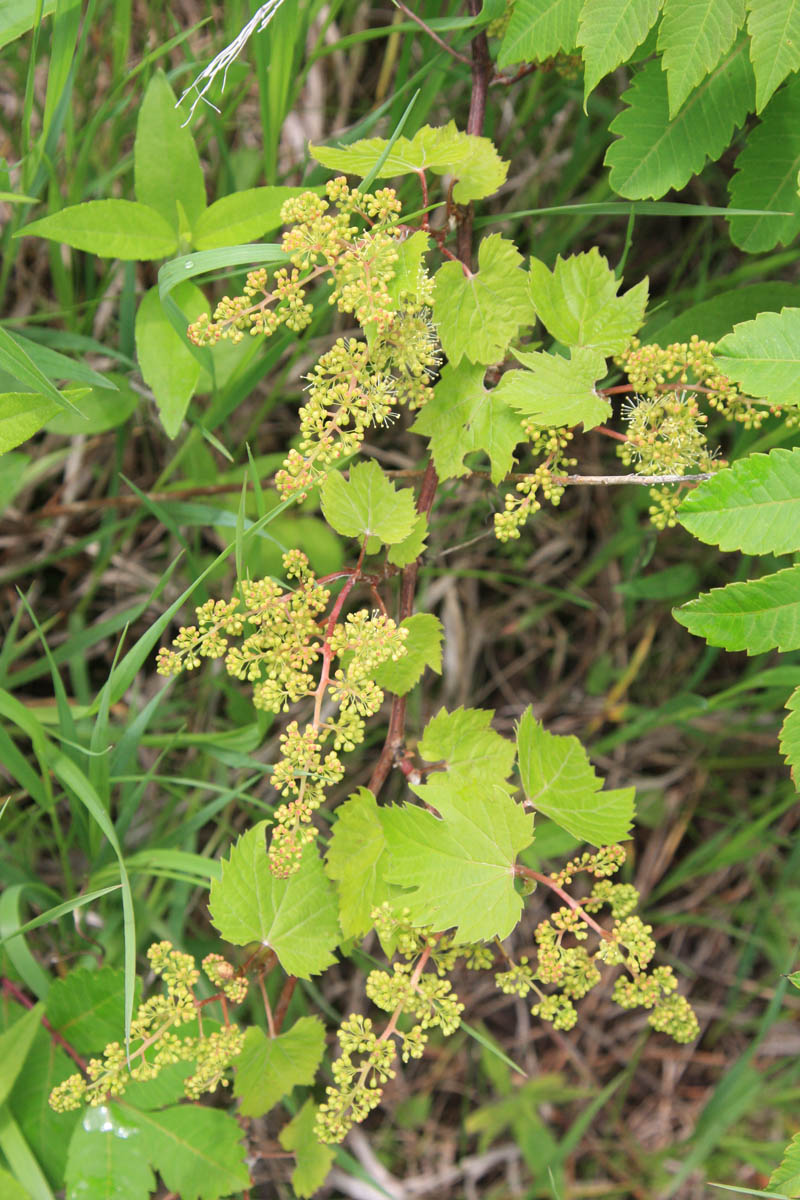
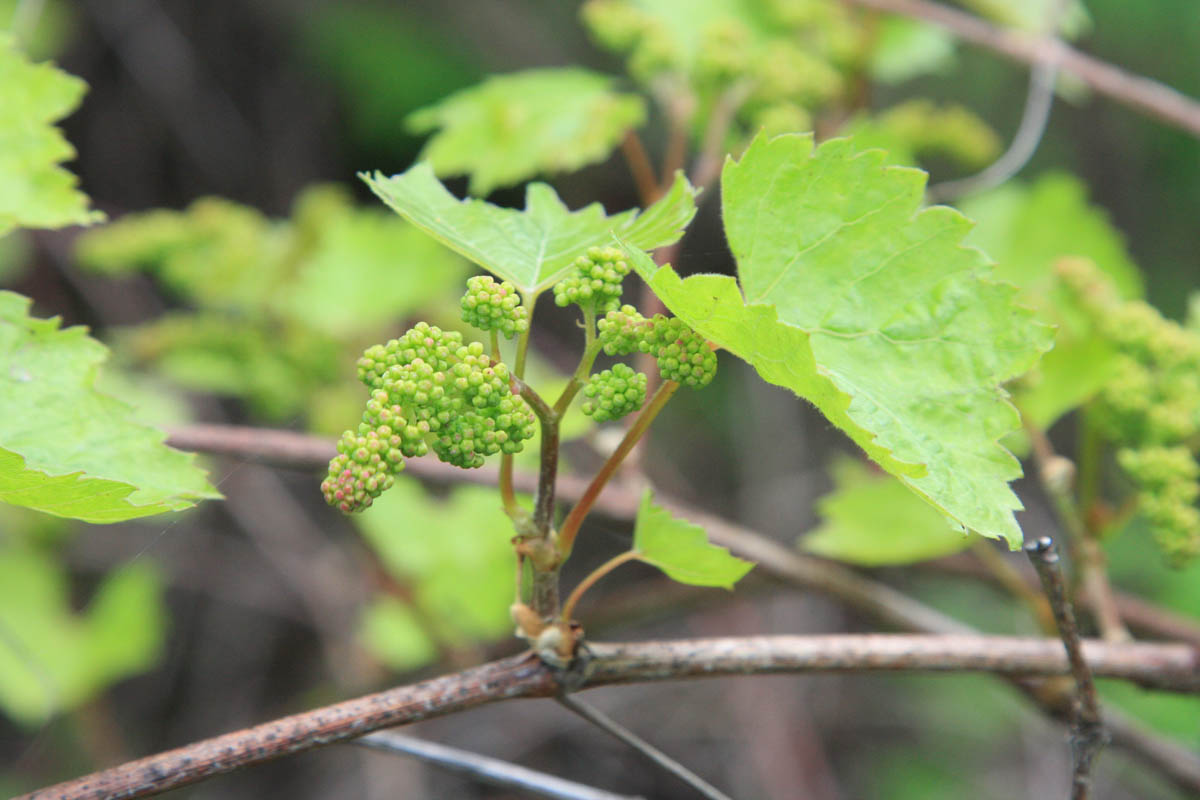
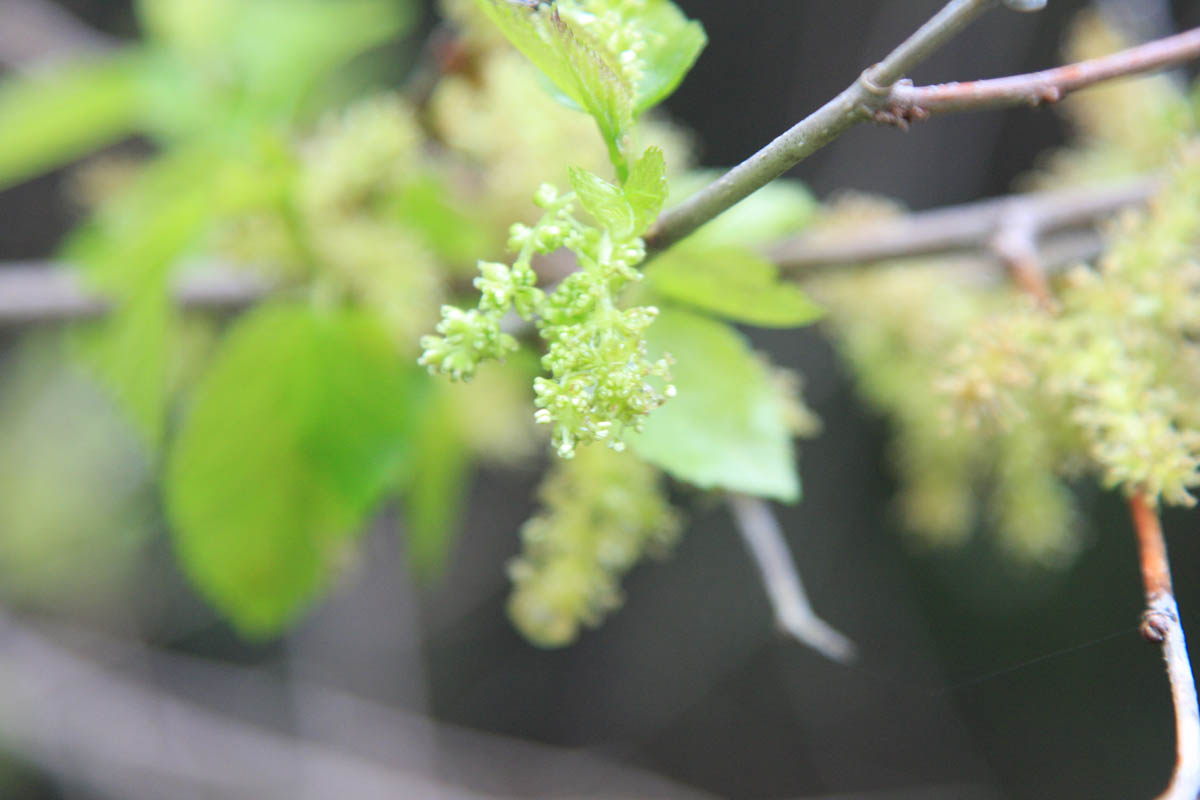
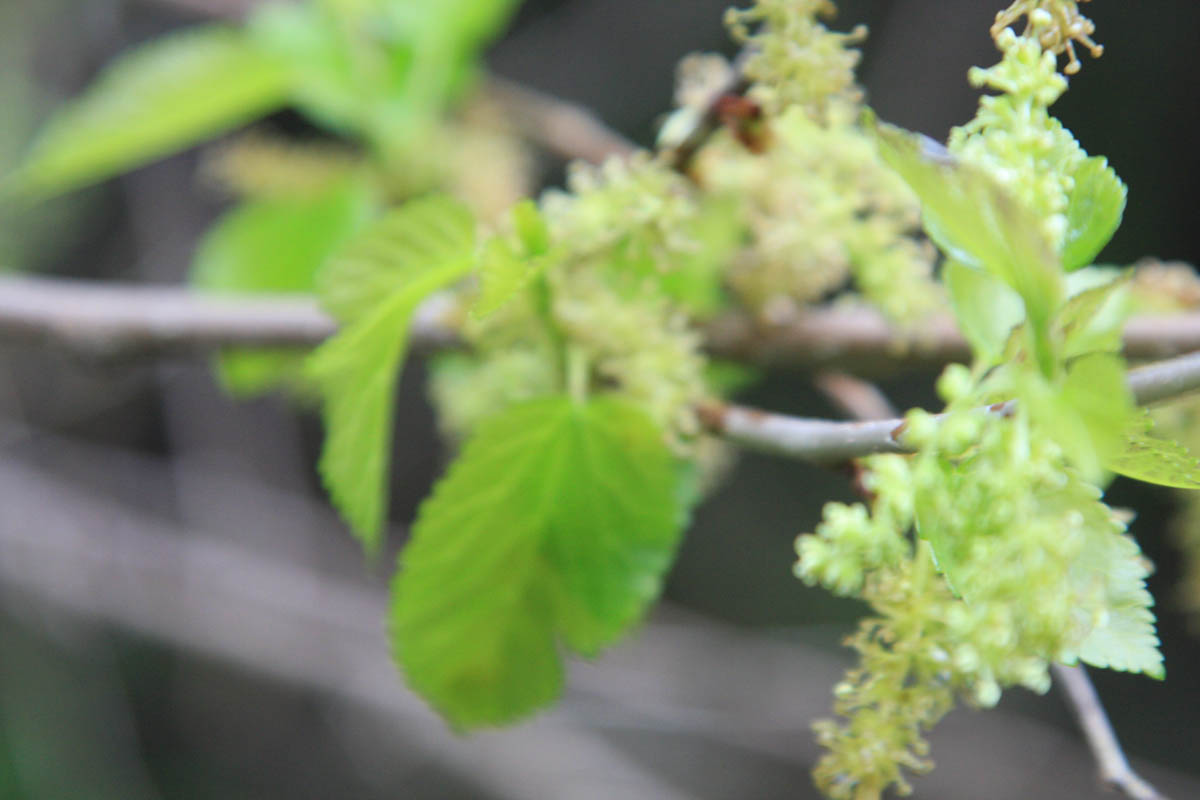
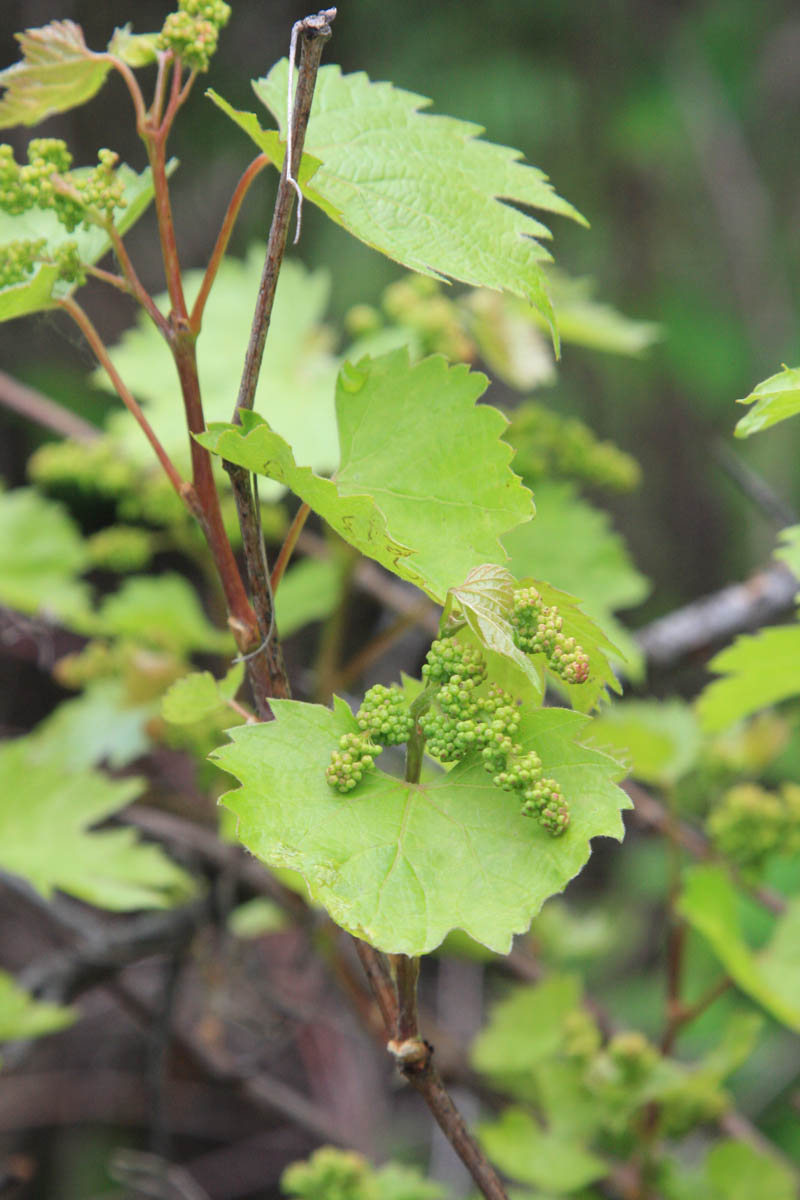
Tiny, white flowers in elongated clusters. Blooms May to June.
Fruit:
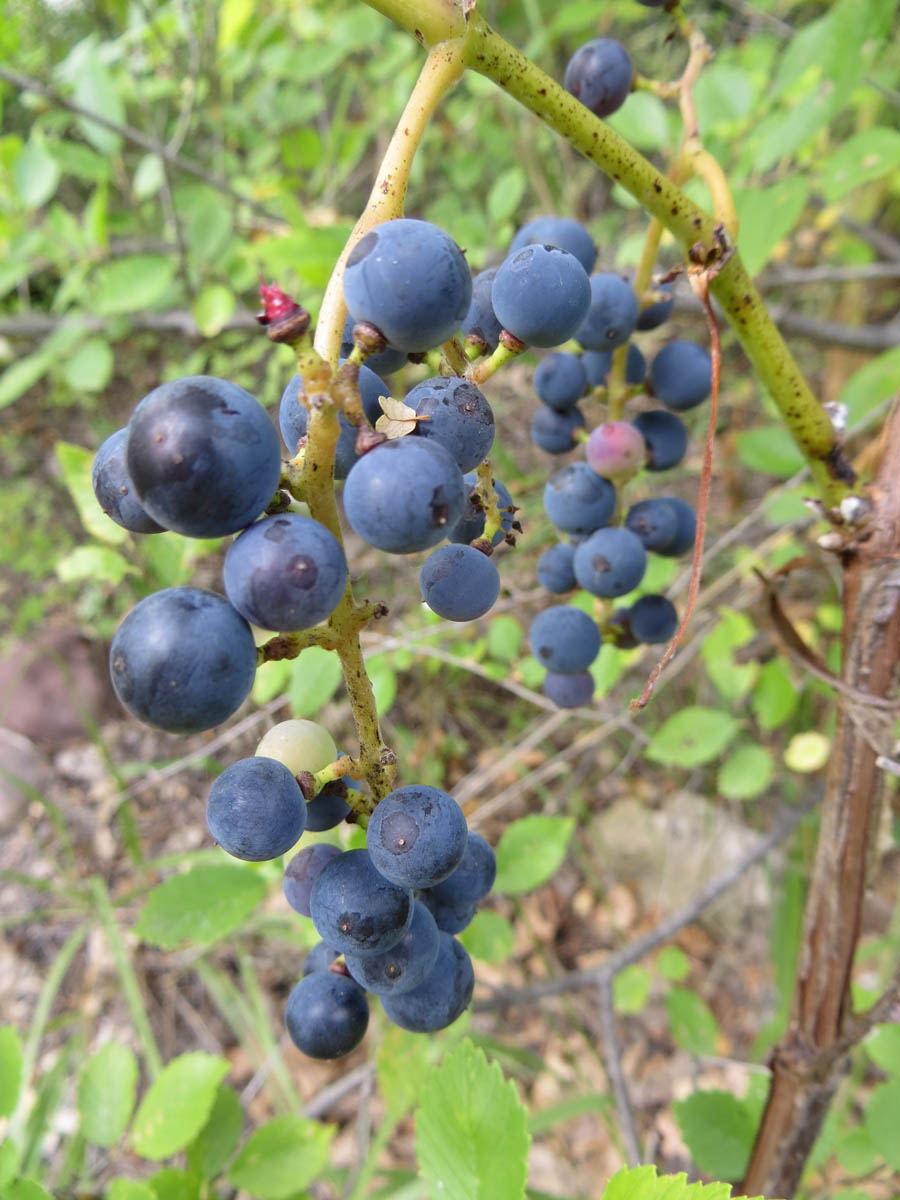
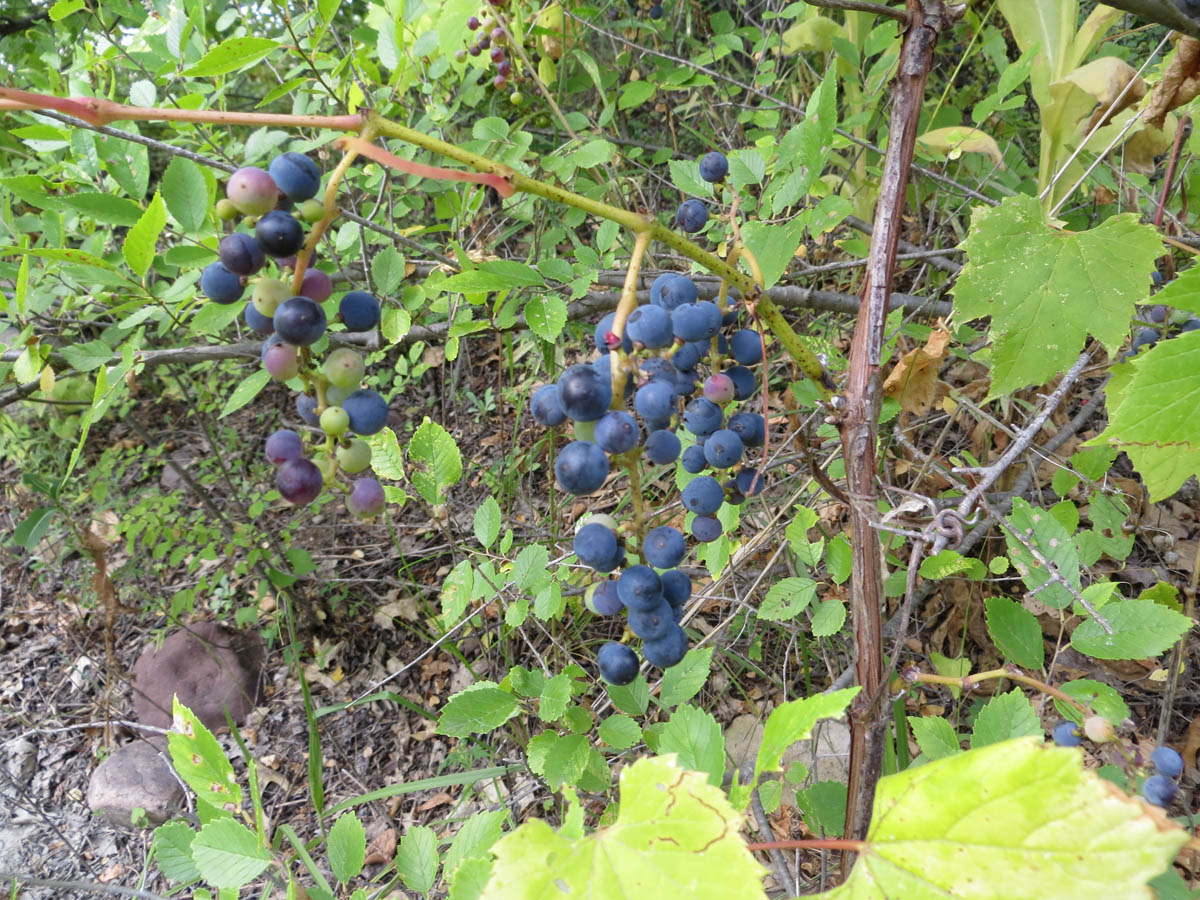
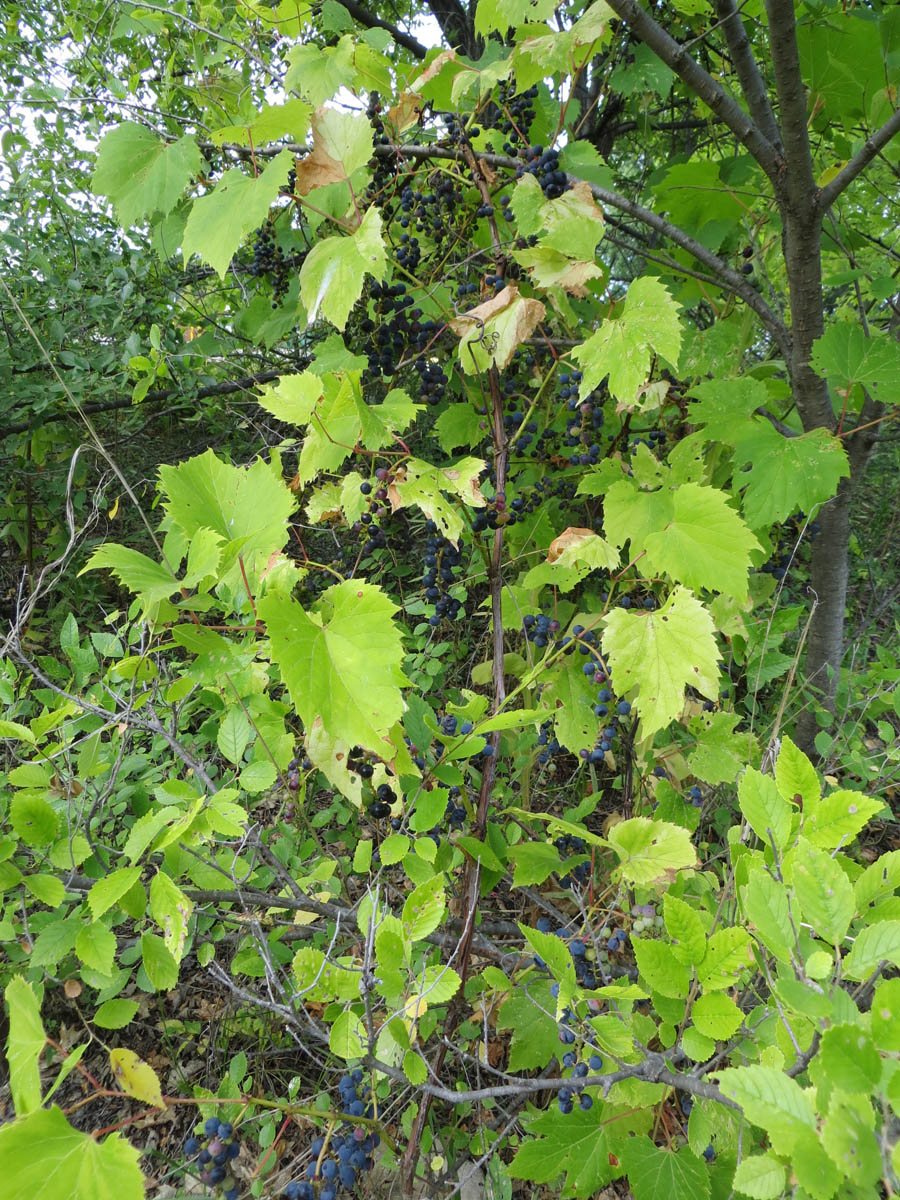
Medium blue to nearly black grapes each containing 2-6 oval, blunt seeds
Habitat:
Wet, sandy soils along roadsides, fence rows, forest edges and river banks. Tolerates part-shade to sun, average to moist soil.
Plant Characteristics
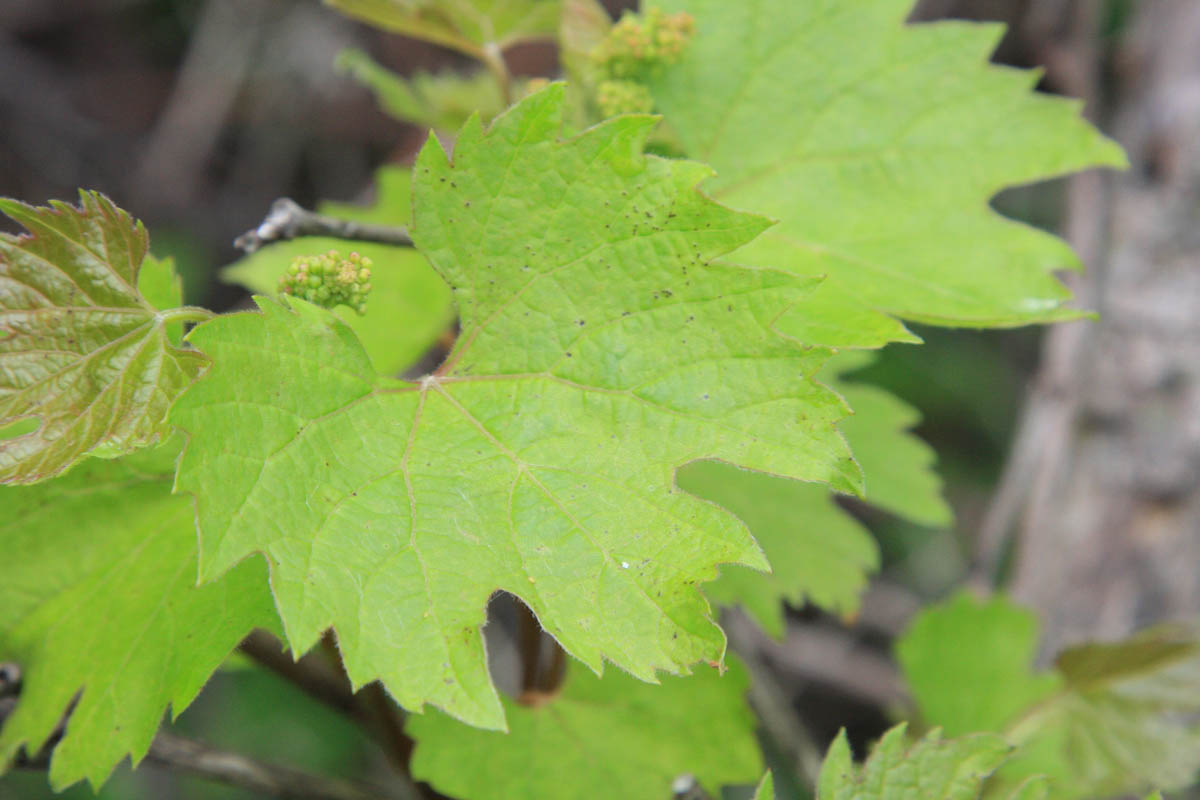
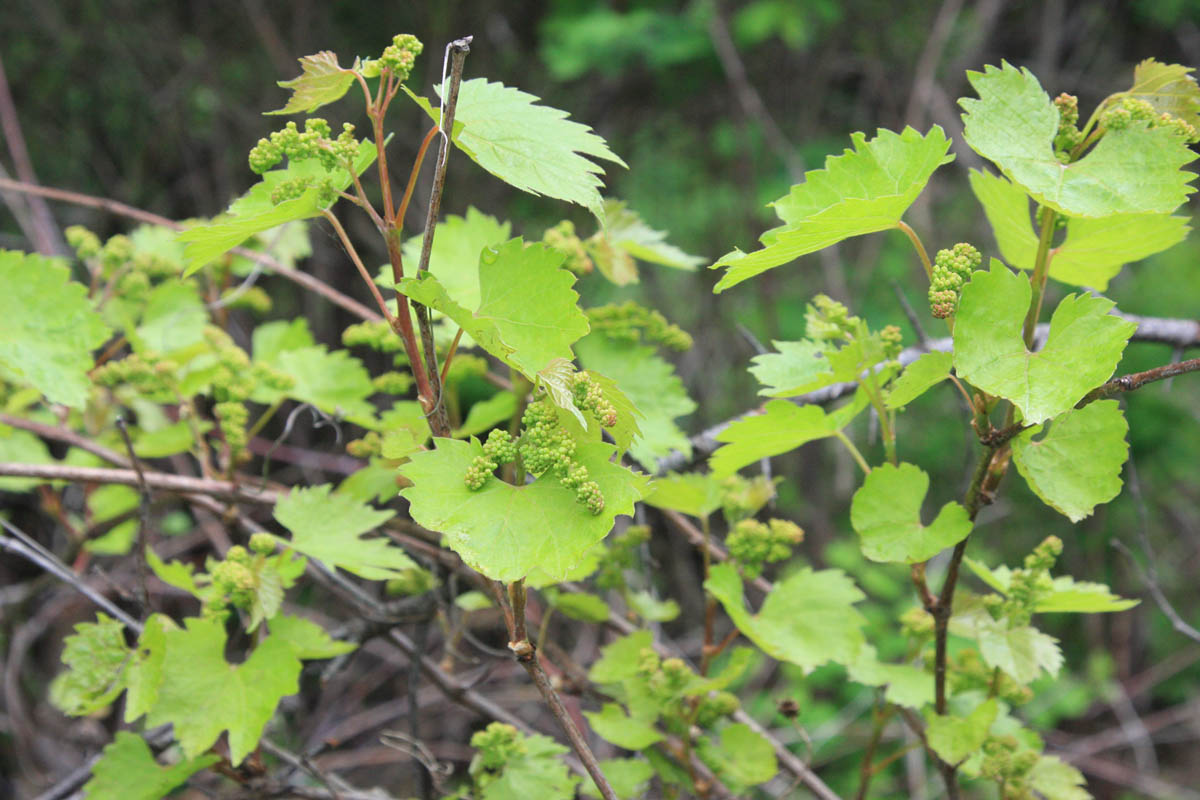
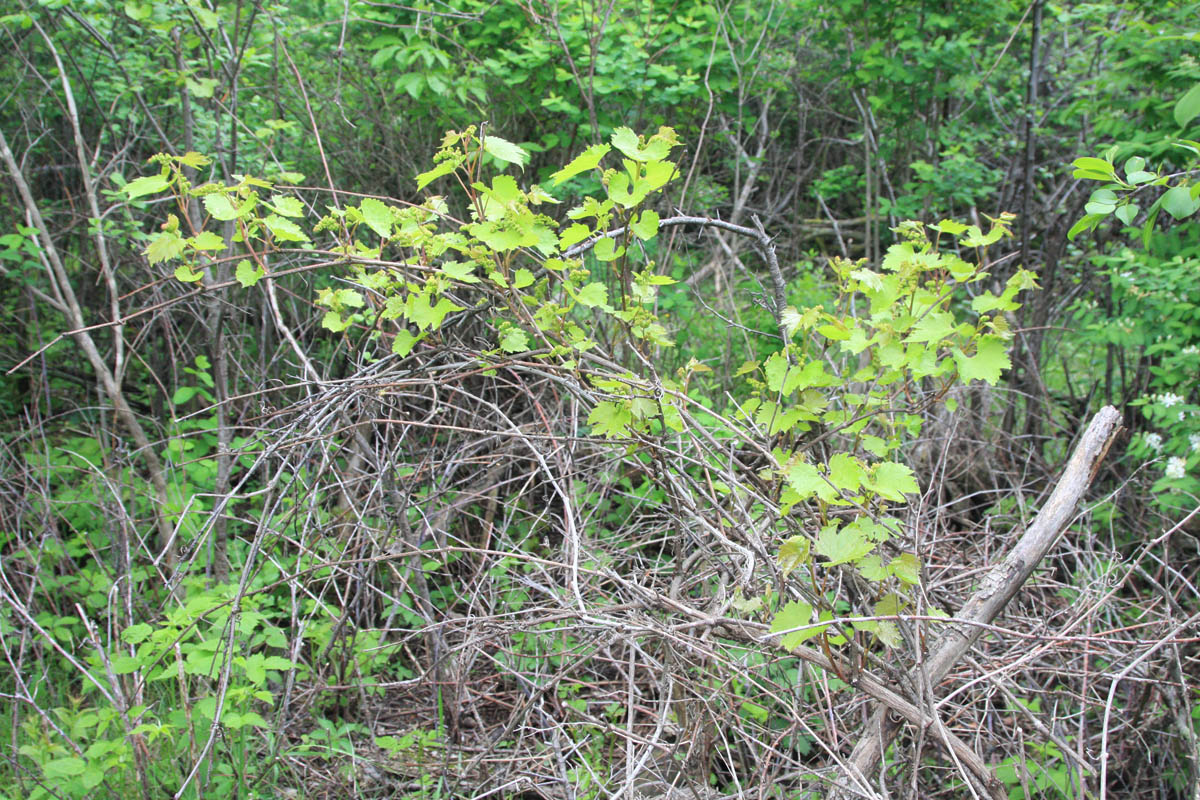
This is the most common wild grape in Minnesota. Leaves are alternate, simple and lobed, although there can be dramatic differences in the lobingpattern from one leaf to the next. The lobes are generally sharp-pointed and there are also large sharp teeth along the margin. Underside of leaves is hairless except along veins. The growth form is that of a woody vine. There are well-developed tendrils that wrap around nearby plants or other objects to help the vine climb.
Dakota Cultural Use
The leaves and fruit are both edible. The fruit was used for food, either fresh or dried for winter use.