General Details
Plant Characteristics
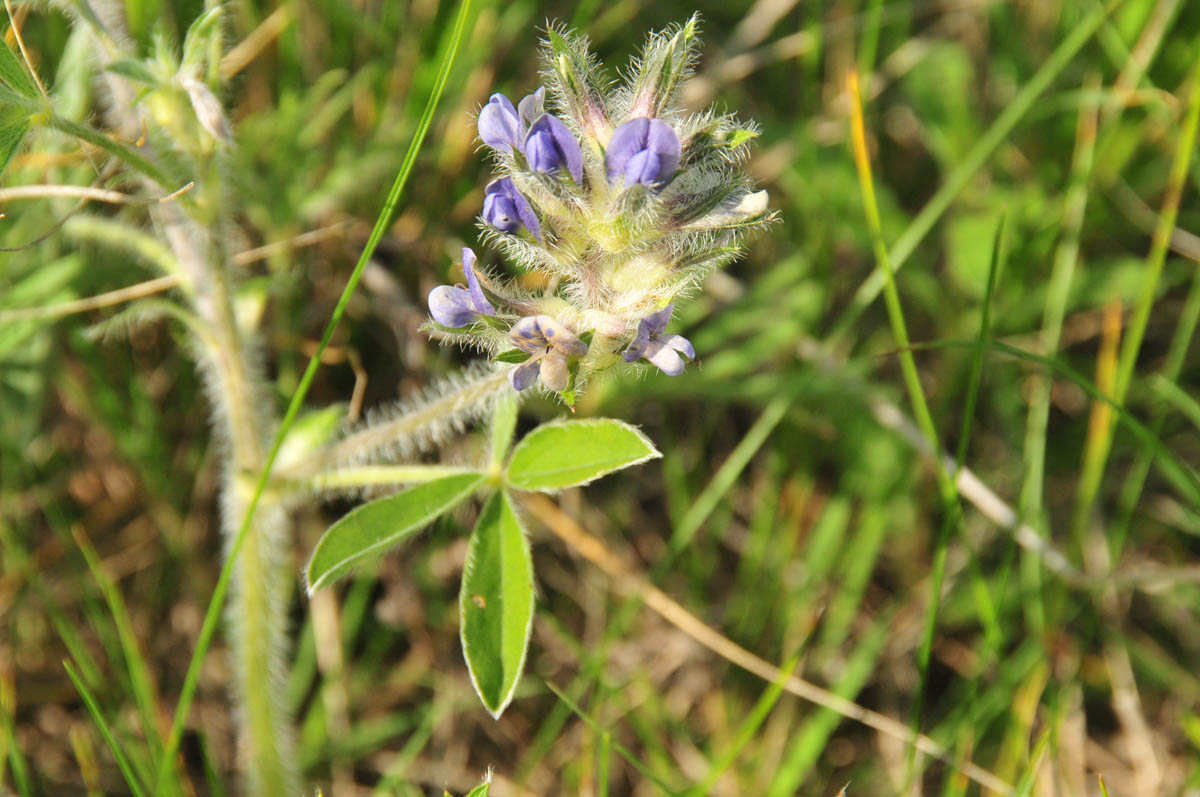
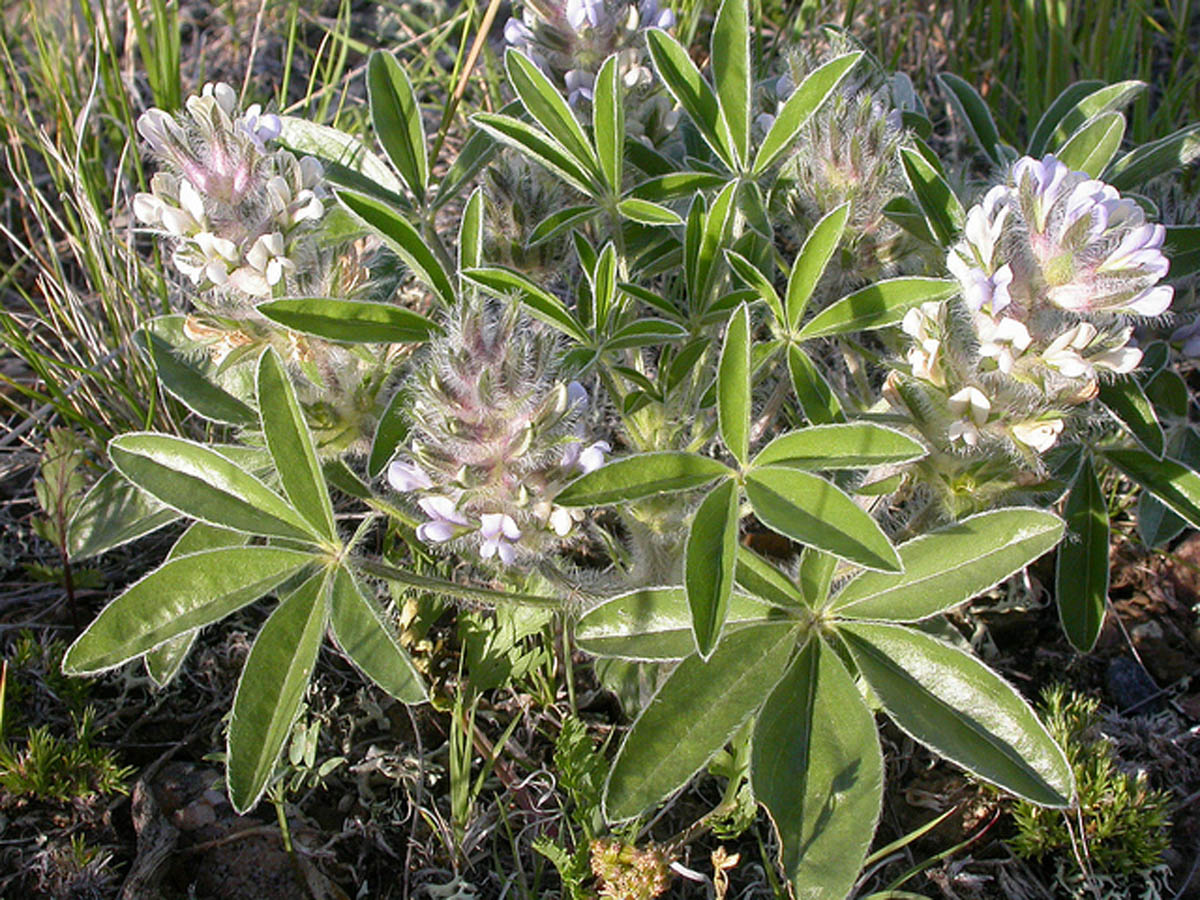
A starchy, tuberous, edible root, this plant has palm-shaped leaves that divide into 5 leaflets. Hairs on the underside of leaflets, and spreading hairs on stems. Roots are harvested before fruiting begins in the fall, since this perennial will detach itself and tumble across the prairie, scattering its seeds, thus making it difficult to find. This is a member of the pea family.
Dakota Cultural Use
The roots of this plant were an important item of the vegetable diet of the Plains tribes. After being peeled they were eaten fresh and uncooked or cooked. Large quantities were dug in June and early July to peel and dry for the winter food supply. The peeled roots were braided in long strings by the tapering ends, as strings of garlic are braided by the tops. The root is both farinaceous and glutinous and seems to form a desirable food with a palatable taste characteristic of the bean family. Growing as this plant does, on the dry prairie in hard ground, with the enlargement of the root several inches below the surface, it is no easy task to harvest it. The top of the plant breaks off soon after ripening, and is blown away, scattering the seed, so the root is then almost impossible to find; hence it must be harvested before this occurs. The top usually has three or four branches. When the women and children go to the prairie to gather the roots, on finding a plant the mother tells the children to note the directions in which the several branches point and a child is sent in the general direction of each branch to look for another plant, for they say the plants “point to each other.” It has so important a place in the economy of the Plains tribes and has had for so long a time that it enters into their mythology, folklore, stories, and sleight-of-hand tricks.